One client, shown in full.
Most consultants open with a wall of logos. I have one named client, so instead of a logo I will show you the whole job: the brand, the website, the software running the business behind it, and the four things I told them not to pay for.
- Client
- IronRoot Property Services
- Trade
- Lawn care, cleanups and hauling in Bucks County, PA
- Built
- Brand · Website · Custom CRM · Invoicing
- Status
- Live and running
The job
IronRoot is a one-owner property business in Bucks County: lawn care, seasonal cleanups, hauling. The work was already good. What it needed was the rest of a business built around it: one name that appears the same way everywhere, a website that turns a phone screen into a phone call, and somewhere for a lead to live between the first ring and the paid invoice.
And it needed all of that without a stack of monthly subscriptions underneath it. A one-truck business cannot carry enterprise software, and it should not have to. So the brief was as much about what to leave out as what to build.
The name, and the front door
Two jobs that are really one job: make the business look like itself everywhere a customer meets it.
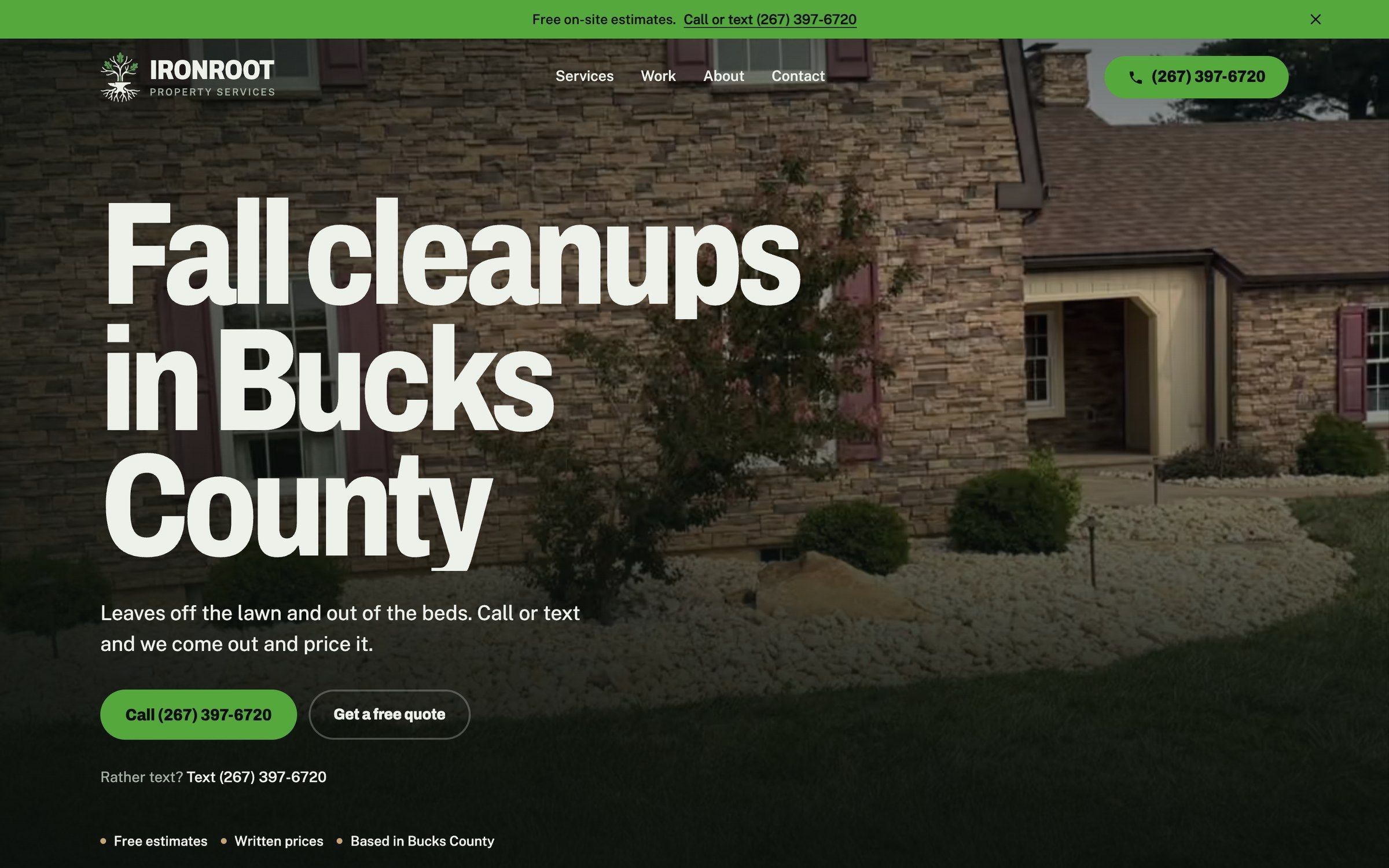
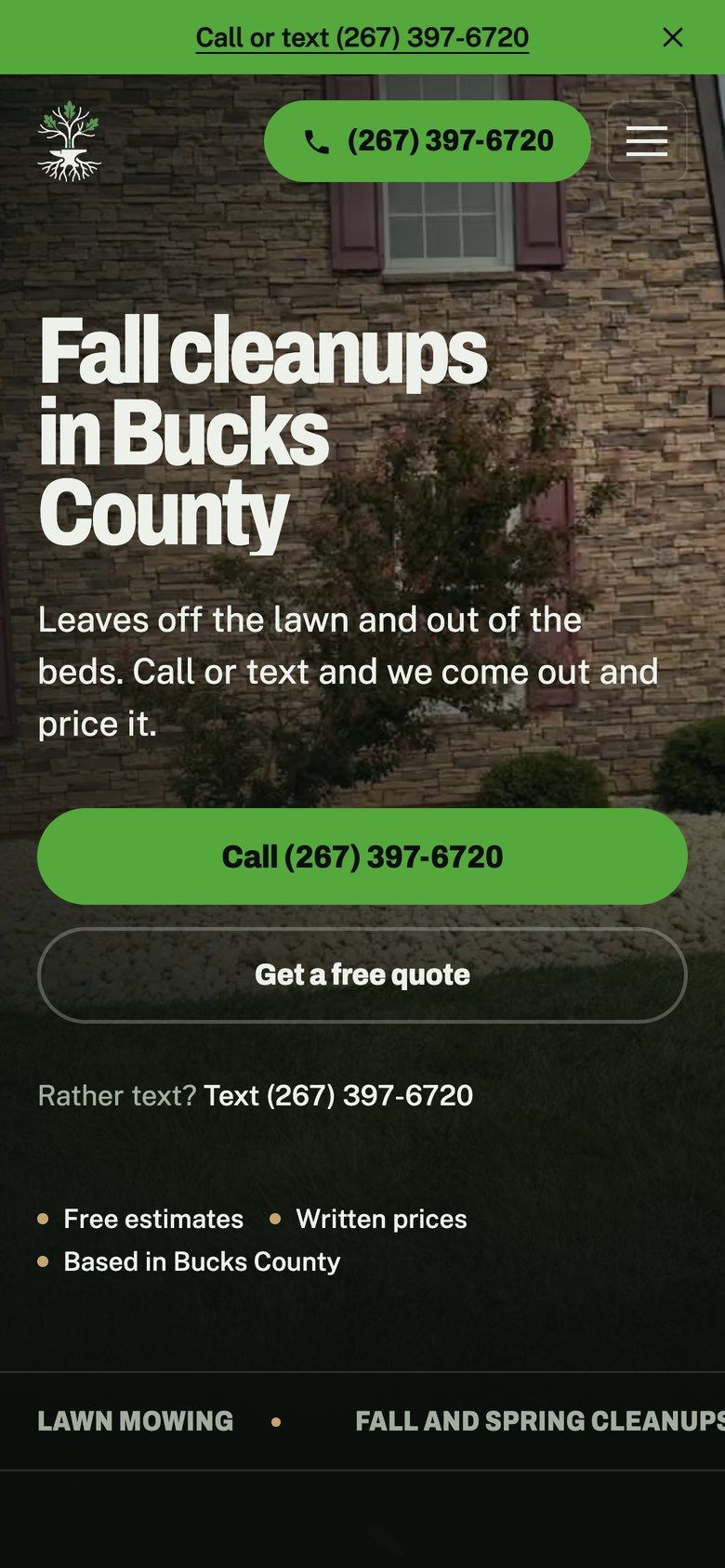
One name, one mark, one voice
The invoice template had been going out under a different name than the business. Now the logo, the site, the invoices, and the paperwork all say the same thing, which is the cheapest credibility a small business can buy.
A site that makes the phone ring
Hand-coded and fast, with the phone number at the top of every screen and a call or text button a thumb can reach. Plain copy (“Free visit, written price, nothing owed either way.”) and photographs from IronRoot's own jobs, not stock. The quote form saves a request the moment someone enters a phone number, so a half-finished form still turns into a callback.
The software behind it
Built from scratch around how IronRoot actually works, instead of bending an off-the-shelf CRM until it almost fits. This is the part no template sells you.
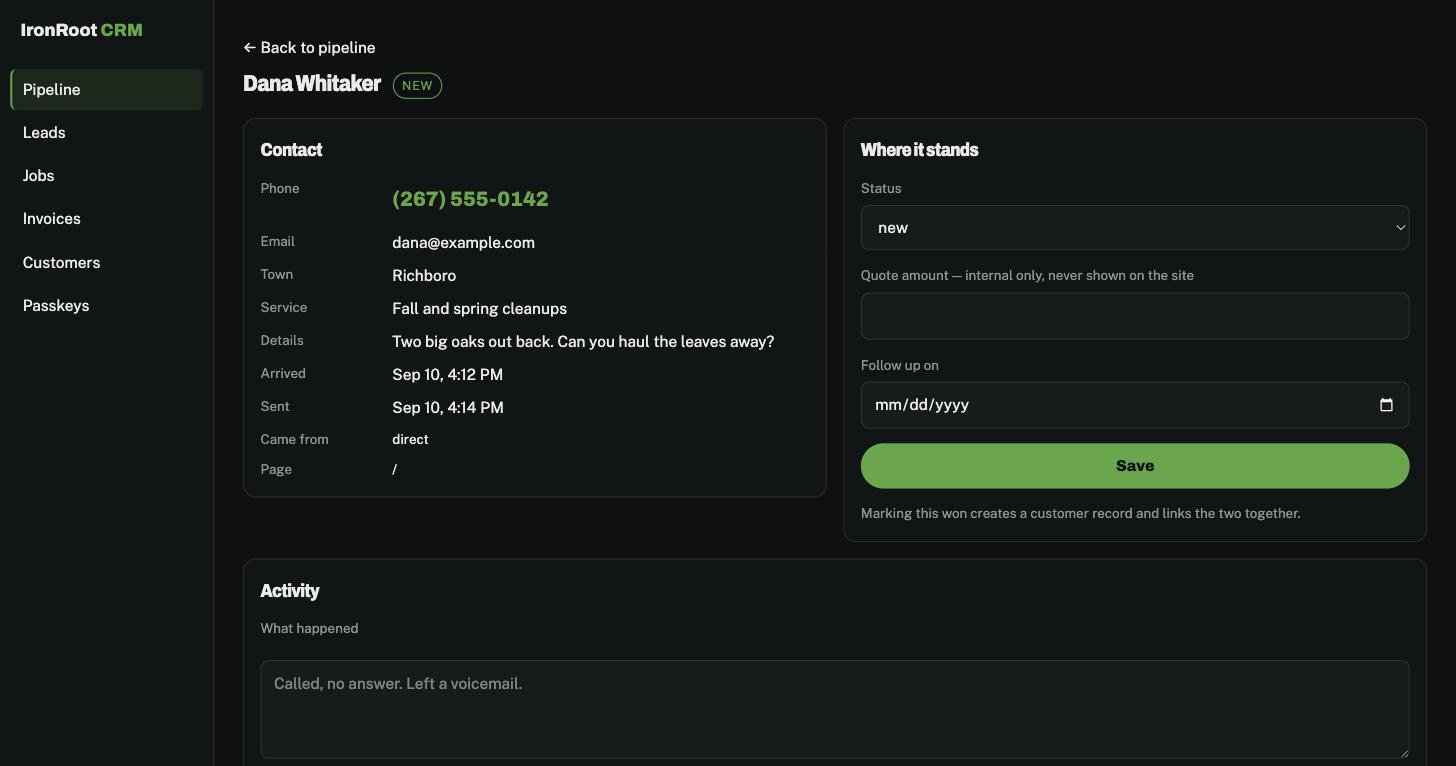
- Every quote request lands in the pipeline
- and sets off an email alert, so nothing sits unseen overnight.
- A lead moves from new to contacted, quoted, and won
- carrying a follow-up date and a log of every call made against it.
- Marking a lead won creates the customer
- and jobs, invoices, and completed job forms all hang off that record.
- Quote amounts stay internal
- priced and tracked inside the CRM, never shown anywhere on the site.
- The team signs in with a password or a passkey
- and only the people on its roster get in at all.
What I talked them out of
The part of the job nobody invoices for: deciding what not to build. Four calls I made on IronRoot's behalf, each one a line item that never appeared on a bill.
No card processor
Customers already pay by check or payment app. Adding cards would have meant a setup to do, a monthly fee to carry, and a cut of every job, to solve a problem nobody had.
No invoicing platform
Invoices are records and PDFs with date-based numbers. That is a system the owner already understands, with nothing new to learn and nothing to renew each year.
Their tools, not mine
The owner drafts with ChatGPT. So the invoice template and its instructions were written to work in that tool, rather than pulling the work back into whatever I happen to prefer.
No dependency on me
A plain-English guide covers the whole thing end to end. If I disappeared tomorrow, IronRoot would still run. That is the point of building it this way.
That's the whole portfolio.
One client, every part of it shown, nothing dressed up. If you want to know what this would look like for your business, the 15-minute call is the whole process: describe the job you would most like to never do again, and you'll get a straight answer.